|
 Newsletter
Dedicated to Austrian-Hungarian Burgenland Family History
THE BURGENLAND BUNCH NEWS - No. 187
May 31, 2009, (c) 2009 by The Burgenland Bunch
All rights reserved. Permission to copy excerpts granted if credit is provided.
Our 13th Year, Editor: Johannes Graf and Copy Editor Maureen Tighe-Brown
The Burgenland Bunch Newsletter, founded by Gerry Berghold, (who retired in Summer, 2008, and
died in August, 2008), is issued monthly as email and is available online at
http://www.the-burgenland-bunch.org
Current Status Of The BB:
* Members: 1719 * Surname Entries: 5535 * Query Board Entries: 4116
* Newsletters Archived: 186 * Number of Staff Members: 14
This first section of our 2-section newsletter concerns:
1) GOOD DOGS DO STRAY: MEMOIR OF AN IMMIGRANT FROM HUNGARY (by Emmerich Koller)
2) A HAPPY REUNION AFTER 52 YEARS (by Emmerich Koller)
3) PORNÒAPÀTI & RÖNÖK (translated by Emmerich Koller)
4) HIANZNMUSEUM IN RAABFIDISCH / RÁBAFÜZES
5) KÖRMEND CASTLE
Main theme: Borderland
1) GOOD DOGS DO STRAY: MEMOIR OF AN IMMIGRANT FROM HUNGARY (by Emmerich Koller)
A summary by the author Emmerich Koller
On November 4, 1956, just as the church bell of Pernau, a.k.a. Pornóapáti, announced the noon
hour, I stepped across the border into Austria, thereby making the first step in difficult
journey that would eventually take my family and me to America. In my memoir, Good Dogs Do
Stray, I describe the intolerable conditions that forced my family to leave communist Hungary
and what happened to us from that day forward. Before coming to that life-altering event,
however, I dedicate more than half of my book to exploring the history of my native
German-Hungarian village of Pernau, the surrounding region and the village life itself that
shaped and formed my siblings and me.
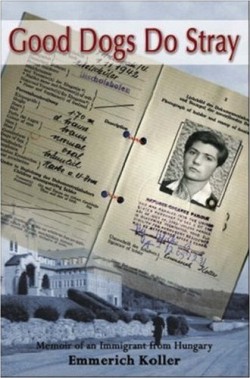 During
that first cold winter of 1956-57, our new life as refugees was marked by homesickness,
uncertainty, and general misery. The Bürgermeister of Oberbildein took pity on my struggling
family by giving my father odd jobs. One day as he was cutting down bushes along the Pinka
between Ober- and Unterbildein, a woman who walked past him said, “Ein guter Hund bleibt zu
Haus.” – “A good dog stays at home.” In my book, I show that her advice was more malicious
than accurate and I validate all who ever strayed from their homeland and found a new home in
a foreign land. Aside from delivering a simple message, my most fervent hope is to delight my
readers with stories that I experienced myself or are part of the Koller family lore. During
that first cold winter of 1956-57, our new life as refugees was marked by homesickness,
uncertainty, and general misery. The Bürgermeister of Oberbildein took pity on my struggling
family by giving my father odd jobs. One day as he was cutting down bushes along the Pinka
between Ober- and Unterbildein, a woman who walked past him said, “Ein guter Hund bleibt zu
Haus.” – “A good dog stays at home.” In my book, I show that her advice was more malicious
than accurate and I validate all who ever strayed from their homeland and found a new home in
a foreign land. Aside from delivering a simple message, my most fervent hope is to delight my
readers with stories that I experienced myself or are part of the Koller family lore.
My narration begins with Easter Sunday 1945. The Russians are coming! At about ten in the
morning, people flee to their cellars and bunkers as fierce explosions rock the village;
houses collapse, people die. The retreating Germans care little about the loss of innocent
life or village property if their shells from nearby Austria can slow down the pursuing Red
Army. A horrific explosion in our yard awakens me, little Emmerich, to the world around me.
Smoke and dust have barely settled when an officer knocks on the door and asks for needle and
thread. Like a proper gentleman, he returns everything a short time later. Relief sweeps over
the entire family. Not for long. The dreaded horde follows.
After the war, life in the village returns to a semblance of normalcy for a few years before
the communist plague destroys the traditions and way of life established by good, hard working
people over the course of centuries. My siblings and I belong to the last generation that
experienced the old village life before it disappeared forever. With my descriptions, I hope
to conjure up a vanished past and pass it on to future generations.
To get a flavor of what village life was like, we accompany the Kleinrichter or kisbiró with
his drum on his appointed round, and take an intimate tour of the old village. We hear the
sound of the trumpet that summons the pigs for their daily dig and wallow in the woods. We
watch with delight as our seasonal friends, the storks, feed their hungry chicks in their nest
on top of the rectory’s chimney. As we work in the fields, we are entertained by the call of
the cuckoo bird and the golden oriole. On our way home at dusk, we are rendered speechless by
the beauty of a nightingale’s serenade. We can’t get enough of the sweet smell of hay, of our
own wine grown in our own vineyard, the Krapfen mom made on Fat Tuesday, or the irresistible
smell of fresh bread that grandma just pulled out of the bread-baking oven. We meet Seppl the
“village idiot” as he digs out stumps in the forest and we feel sorry for him when he is duped
into carrying the red flag at the head of the May Day parade. We walk into the one-room
schoolhouse where a little boy forms his first letters on a slate board and are shocked when
he gets a serious beating from his teacher for forging his father’s signature in block
letters. We attend Mass in the village church where a serious ambition in a child’s mind is
formed. We discover Shaekl, the family cow, who has an endearing personality and a mind of her
own. We walk into the dark forest near the Koller house and sense that the forest isn’t just a
collection of trees but a treasured friend with a generous soul. We meet the roving gypsies
who are feared but also pitied for their poverty and sad condition. We are concerned as
cast-offs of the war become dangerous toys for children, and we hold our breath as we watch a
lad walk into the minefield by the border.
This is just the beginning. The story goes on with many poignant and humorous tales from a
deprived childhood, an old-fashioned upbringing, and a long and improbable journey from a
simple village in the Pinka river valley to the sophisticated metropolis of Chicago. Good Dogs
Do Stray is a narrative blend of a young person’s wonderment and the seasoned reflection
of an older man. I tell the true story of my family, but woven into the family’s history is my
own metamorphosis from poor country boy to seminarian, to college graduate, to member of a
religious order, to teacher. Setbacks were always followed by progress because we dared to
transcend conventional norms and boundaries. Still, it took a long time to embrace the concept
that it is acceptable for good dogs to stray.
For any questions about the book or to order a copy, contact the author Emmerich Koller
through his webpage: www.emmerichkoller.com or
simply e-mail him at:
emmerich3(a)comcast.net.
About the author
Emmerich, a.k.a. Imre Koller, was born in 1942 in Pernau/Pornóapáti, Hungary. Two years after
his family’s escape to Austria in 1956, Emmerich entered the seminary at Sankt Rupert,
Bischofshofen, to study for the priesthood. In 1960, the Kollers immigrated to America and
settled in Chicago. Emmerich left the seminary in 1966 and became a German teacher. Today he
lives in Winnetka with wife Ann and youngest son Andrew. He holds a BA in Philosophy, an MA in
German and an MA in Education. During his teaching career of 36 years, he received several
awards: The Distinguished Teacher Award at President Clinton’s White House (1993), The
Certificate of Merit from the Goethe Institute in New York (1989), two Outstanding Teacher
Awards from the University of Chicago (1985, 2001).
2) A HAPPY REUNION AFTER 52 YEARS (by Emmerich Koller)
Back in the first half of the 1950’s, Bán Korsos Sándor, the director of the village school of
Pernau, a.k.a. Pornóapáti, started a music band, thus giving the more musically talented of
his pupils an opportunity to show off and expand their musical skills. In no time, the little
group of nine pupils made such fine music that its reputation traveled beyond Pernau and
performed in neighboring villages and even Szombathely, a.k.a. Steinamanger, where it won
first prize in a young musicians’ competition. The band's repertoire consisted of local,
mostly German, folksongs and some fancier tunes from operettas. By the spring of 1956,
arrangements were being made for a brief tour to Austria, an exceptionally generous concession
on the part of communist Hungary of that time. The pictures for the passports and promotion
were ready, visas were being processed, Die blaue Donau by Johann Strauß Jr. was being
practiced weekly. Then suddenly it all came to naught. The revolution broke out in October of
that year and by November 4 half of the band members, including Bán Korsos, were gone. They
and their families fled across the Iron Curtain. The band ceased to exist.
Fifty-two years went by before the band members saw each other again. It happened last summer,
on July 12, at the exquisitely appointed Alpesi Fogadó és Borház located in the Pinka Valley
between Vaskeresztes/Großdorf and Csatár/Schilding. After an unforgettable reunion and a
delicious dinner such as we couldn’t even have dreamed of 52 years ago in communist Hungary,
the owners Erzsi and Zoltán Heinisch invited us all to continue our celebration with music and
singing at their beautiful villa in the vineyards of Csatár. It was a perfect reunion on a
beautiful summer day that will never be forgotten.
The reunion was attended by all the former band members except Pfliegler Gusti, who is no
longer with us, and Schmied/Hanzel Zsuzsi who couldn’t make it. A good number of guests and
family members participated in the celebration, most importantly, the organizers Franz
Schmalzl of Viehhofen, Salzburg, and Mitzi Perlaki of Pernau.
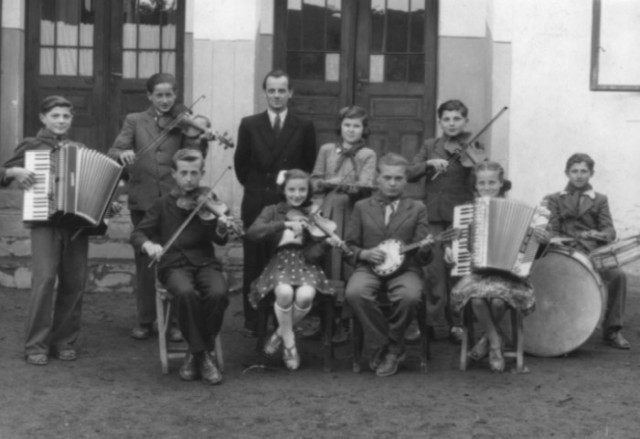
1956 picture from left to right: (sitting) Pfliegler Gusti, Molnár Erzsi, Schmalzl Laci,
Schmied Zsuzsi, Gober Jancsi; (standing) Koller Imre, a.k.a. Emmerich, Sásdi Pista, Teacher
Bán Korsos Sándor, Mátyás Erzsi, Bruckner Georg
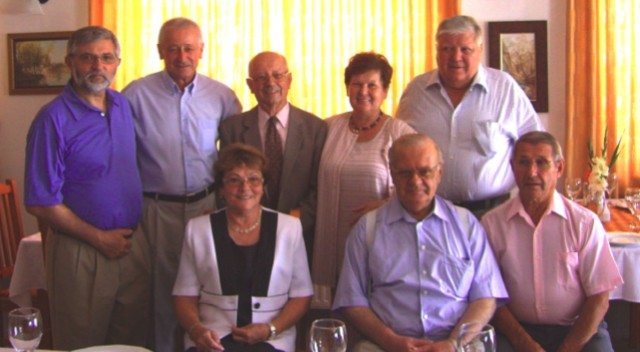
2008 reunion picture: (sitting) Molnár Erzsi – now Mrs. Zoltán Heinisch, Schmalzl Laci,
Gober Jancsi; (standing) Koller Imre/ Emmerich, Sásdi Pista, Teacher Bán Korsos Sándor, Mátyás
Erzsi – now Mrs. Emil Horváth, Bruckner Georg
3) PORNÒAPÀTI & RÖNÖK (translated by Emmerich Koller)
"Village" information from Hungarian Catholic Encyclopaedia
RADLING / RÖNÖK
Rönök, until 1950 Alsó- and Felsörönök (Lower and Upper Rönök), located in the County of
Vas, in the diocese of Szombathely, vicariate Körmend-Szentgotthard. - - The parish existed
already in 1332. The church was dedicated to Saint Imre (Emmerich). The church of today church
was built in 1907. The Turks occupied it in 1526. In 1618 the inhabitants first became
Reformed then Lutheran. In 1789 the church was rededicated. Since 1951 the church is not
usable. The official language in 1880 was Hungarian, in 1910 German, in 1940 German and
Hungarian. The pastors were: 1452 Kelemen, 1789 Stibler János - administrator, 1793 Hubertus
OFM - administrator, 1794 Eisner István - admin., 1799 Schrammel János, 1807 Mittl István -
admin., 1809 Schmitzl Mihály, 1831 Griller Antal, 1835 Spreiczenbart Lipót, 1864 Czigler
József, 1879 Reichl Ferenc, 1886 Eberhard József - admin., 1887 Herczeg Miklos - admin., 1895
Bartl József - admin., 1941 Zadravec Mátyás - admin., 1945 Németh István - admin., 1948 Lautz
Alfred - admin., 1949 Kömives János - admin., 1951 Weber Antal - admin., 1980 Farkas Antal -
admin., Since 2000 the parish is administered from Szentgotthard. - Inhabitants in 1840: 556
Rom. Cath., 30 Lutheran, total 586; in 1910 there were 802 Rom. Cath., 43 Lutheran, 6 Jewish,
total 851; in 1940 787 Rom. Cath., 32 Lutheran, total 819; in 1983 209 Rom. Cath., total
inhabitants 636. - In 1948 4 teachers teach 120 students in its elementary school. Schem.
Sab. 1914:65. - Schem. Sab. 1977:42. - MKA 2000:536
PERNAU / PORNÓAPÀTI
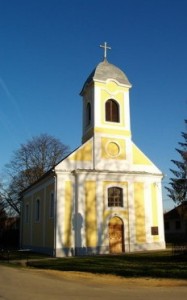 Parish of
Pornóapáti, located in Vas County, diocese of Szombathely. - The parish existed already in
1332. The church was dedicated to the Virgin Mary and Saint Margaret of Antioch. The existing
church today, dedicated to St. Margaret, was finished in 1795. The Turks destroyed the
original church in 1530. In 1780 a new church was founded. The organ was built in 1832 by an
unknown master. Around 1870, it was reconstructed by Peppert Nándor. The large bell, 82 cm in
diameter, was poured in 1492 by an unknown master. It is Hungary's oldest active bell. The
newer bell, 57 cm in diameter, was made by the sons of Seltenhofer Frigyes (i.e., Friedrich
Seltenhofer). The church records go back to 1790. The patroness in 1880 was the grand duchess
Therese. The official languages in 1880 were German and Hungarian; in 1910 German and
Hungarian; in 1940 German and Hungarian. The pastors of the parish were: Glaser György until
1788, Hegyi János 1807, Schenk Vince 1820, Schmidt György 1828, Köberl Antal 1836,
Schamadinger András 1841, Káncz György Ferenc 1846, Vindisch Antal 1847, Menyhárt Ferenc 1860,
Fülöp István 1885, Höbe Károly 1887-88, Cziczer Ferenc 1892, Számálovits Ferenc 1893, Iritzer
(Traugott) Imre 1910, Gartner Jozsef 1917, Pataki Ferenc 1921, Keleti Kálmán 1922, Illés
György 1951, Lautz Alfred Pál. The parish was cared for by Vaskeresztes/Großdorf till 1982, by
Nárai till 1984, by Vaskeresztes till 1993, again by Nárai till 2000. Inhabitants in 1840 -
508 Roman Catholic, 4 Lutheran, total 512; in 1910 - 683 Rom. Cath, 5 Lutheran, 1 Reformed, 7
Jewish, total 696; in 1940 - 621 Rom. Cath, 2 Lutheran, 9 Reformed, total 632; in 1983 - 465
Rom. Cath. In 1948 the village school had two teachers and 78 pupils. Szántó János Patay 1980.
- MKA 2000:524. Parish of
Pornóapáti, located in Vas County, diocese of Szombathely. - The parish existed already in
1332. The church was dedicated to the Virgin Mary and Saint Margaret of Antioch. The existing
church today, dedicated to St. Margaret, was finished in 1795. The Turks destroyed the
original church in 1530. In 1780 a new church was founded. The organ was built in 1832 by an
unknown master. Around 1870, it was reconstructed by Peppert Nándor. The large bell, 82 cm in
diameter, was poured in 1492 by an unknown master. It is Hungary's oldest active bell. The
newer bell, 57 cm in diameter, was made by the sons of Seltenhofer Frigyes (i.e., Friedrich
Seltenhofer). The church records go back to 1790. The patroness in 1880 was the grand duchess
Therese. The official languages in 1880 were German and Hungarian; in 1910 German and
Hungarian; in 1940 German and Hungarian. The pastors of the parish were: Glaser György until
1788, Hegyi János 1807, Schenk Vince 1820, Schmidt György 1828, Köberl Antal 1836,
Schamadinger András 1841, Káncz György Ferenc 1846, Vindisch Antal 1847, Menyhárt Ferenc 1860,
Fülöp István 1885, Höbe Károly 1887-88, Cziczer Ferenc 1892, Számálovits Ferenc 1893, Iritzer
(Traugott) Imre 1910, Gartner Jozsef 1917, Pataki Ferenc 1921, Keleti Kálmán 1922, Illés
György 1951, Lautz Alfred Pál. The parish was cared for by Vaskeresztes/Großdorf till 1982, by
Nárai till 1984, by Vaskeresztes till 1993, again by Nárai till 2000. Inhabitants in 1840 -
508 Roman Catholic, 4 Lutheran, total 512; in 1910 - 683 Rom. Cath, 5 Lutheran, 1 Reformed, 7
Jewish, total 696; in 1940 - 621 Rom. Cath, 2 Lutheran, 9 Reformed, total 632; in 1983 - 465
Rom. Cath. In 1948 the village school had two teachers and 78 pupils. Szántó János Patay 1980.
- MKA 2000:524.
4) HIANZNMUSEUM IN RAABFIDISCH / RÁBAFÜZES
“Do not forget that tomorrow, today’s tool is already history” - Franz Dankovics
In Burgenland today there are several ethnic groups, among them Croatian and Hungarian. But
German-speaking Hianzen still live behind the Hungarian border. A museum in Rábafüzes tells
their story. The first Hianzenmuseum in Raabfidisch/Rábafüzes was opened in Hungary.
The village (of approximately 400 inhabitants) is today a part of the town Szentgotthárd.
There are still about 50 people who speak "Hianzisch". A museum was devoted to them and their
forefathers in what was formerly the village school.
Memorial to the farmer culture and the Hianzen
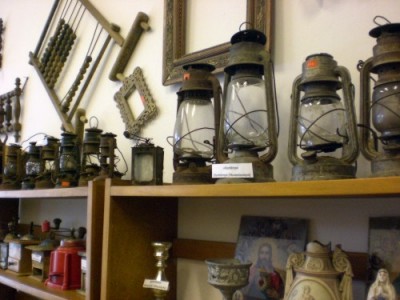 The ethnological
collection's foundation stone was laid by the former principal Ferenc Dankovics and his wife
in the sixties. On 26th May 1986 the collection was opened to the public in the school
building. After Ferenc Dankovics' death, the collection was also extended and, after years of
hardship, it came under the maintenance of the Local Government of the German Minority and the
Branch Library in Rábafüzes. The present exhibition room was provided by the local government
as a final place, and after being redesigned opened its gates to the public. The ethnological
collection's foundation stone was laid by the former principal Ferenc Dankovics and his wife
in the sixties. On 26th May 1986 the collection was opened to the public in the school
building. After Ferenc Dankovics' death, the collection was also extended and, after years of
hardship, it came under the maintenance of the Local Government of the German Minority and the
Branch Library in Rábafüzes. The present exhibition room was provided by the local government
as a final place, and after being redesigned opened its gates to the public.
In the meantime, 500 exhibits have been assembled with years of hard work. The whole inventory
is labeled in Hungarian, German, and Hianzisch.
Contacts in Burgenland
 Until
World War II, the population of Rábafüzes had close contact with their neighbors in
Burgenland. The place was pulsing, says the village eldest, 86 year old Paula Nagy Vincené.
"There were 5 guesthouses in our village, 3 were outside in Bergen. Then there was another
guest house next to the border that already belonged to Burgenland - we also went there to
dance", says the 86 year old. Until
World War II, the population of Rábafüzes had close contact with their neighbors in
Burgenland. The place was pulsing, says the village eldest, 86 year old Paula Nagy Vincené.
"There were 5 guesthouses in our village, 3 were outside in Bergen. Then there was another
guest house next to the border that already belonged to Burgenland - we also went there to
dance", says the 86 year old.
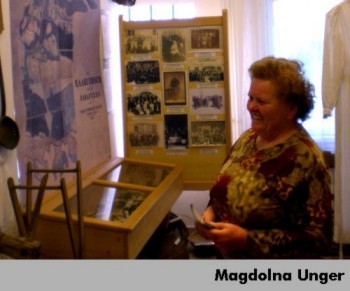
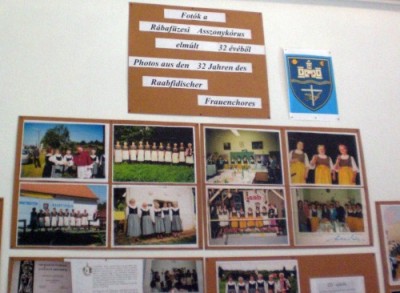
Female Choir of Rábafüzes
In 1976 the Female Choir in Rábafüzes was formed, which has faithfully maintained the song
lore of the village and the surrounding areas ever since then. The songs are also presented in
vernacular "Hianzisch". The founder and leader of the choir is Magdolna Unger, and its
harmonica accompanist is her sister, Edit Unger. The choir has 2 albums so far.
 Hianzenmuseum Hianzenmuseum
Rábafüzes/Raabfidisch
Kodály Zoltán út 2
Open hours:
Wednesday: 11 am - 4 pm
Friday: 12 noon - 6 pm
By previous agreement, another appointment is also possible.
Phone: +36-30-5686861
5) KÖRMEND CASTLE
Körmend was first documented in 1238 as "Curmend", seat of kings. King Béla IV. granted
Körmend town privileges with the right to hold markets in 1244
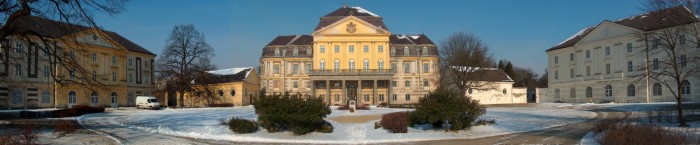
After Körmend was in royal possession, it became the property of various lords. Since 1604,
it has been the central estate of the Batthyány family. The king gave the castle and the
estate of Körmend to Franz II Batthyány in recognition of his service.
From 1716 until 1945, when the family was dispossessed of the castle and the estate by the
communists, Körmend had been the centre of their seigniory.
After the struggle for freedom under the leadership of Prince Rákóczi the Batthyánys moved the
management of their estates to Körmend. Thenceforward it became a prospering small town. The
castle changed to a beautiful baroque palace.
After 1769, the Batthyánys over several centuries collected documents and the majority of
their art treasures were brought here.
The castle originally rose on a hill with a broad moat. The road from the town to the castle
led through a double moat and over timber bridges. In the castle's bailey was a one-storied
residential building. Then there was an outer staircase which led to the timber gallery facing
the bailey. The gallery encircled the whole bailey and led to the loop-holes integrated into
the walls. The ground floor included a grain stock, a dry mill, and a common bakery.
After 1600 and the fall of Kanizsas, a new time began: Körmend became a border town of
military importance. The town's development reached its climax in the mid-17th century. In
1625, Ferenc Batthyány's son Ádám inherited the town. He was a well educated land owner, and
not only a great manager of his properties but also a leading military figure of the country.
He assigned the excellent Italian war engineer, and later imperial main architect, Filiberto
Lucchese to the alteration of the castle.
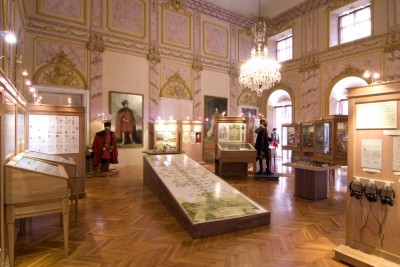 Significant
changes came along with the four years of construction work going on. The main structure of
the castle remained, but its look had been changed. Now there were multi-storied residential
buildings on all four sides, the towers were higher and arcades had been built in place of the
timber gallery. The windows were opened to the courtyard. The massive and medieval character
of the castle remained but the interior was made more comfortable. After the Turkish had been
driven out of the country successfully, the castle of Körmend became one of the "dispensable
castles" and the war council of Vienna ordered its demolition on the 26.01.1702, but the
Batthyánys were able to prevent that. Significant
changes came along with the four years of construction work going on. The main structure of
the castle remained, but its look had been changed. Now there were multi-storied residential
buildings on all four sides, the towers were higher and arcades had been built in place of the
timber gallery. The windows were opened to the courtyard. The massive and medieval character
of the castle remained but the interior was made more comfortable. After the Turkish had been
driven out of the country successfully, the castle of Körmend became one of the "dispensable
castles" and the war council of Vienna ordered its demolition on the 26.01.1702, but the
Batthyánys were able to prevent that.
The town and castle of Körmend suffered during the struggle for freedom under the leadership
of Rákóczi. The army of Antal Eszterházy destroyed the town and the castle. Therefore, at the
beginning of the 18th century the castle actually did not exist and the town was utterly
destroyed.
At the beginning of the 18th century, the coordination of the Batthyány estates was shifted to
Körmend. Lajos Batthyány took over the properties from his father in 1720. He served variously
as imperial and royal chamberlain, privy councilor, chancellor and the last Hungarian palatine
from 1751 to 1765. His societal importance was revealed even in his constructions. Following
his instructions began the generous conversion works of Körmend castle. Thenceforward the
castle stood in an open park, which, with its dynamic layout and arrangement, strove for pomp
and the castle was meant to imitate baroque splendor. The designer of the newly arranged
building was the Italian Felice de Allio, who had already been an important representative of
Austrian baroque in the first half of the 18th century. The construction works began with the
dismantling of the gate tower and the filling up of the moat. Then there was built a new floor
on top of the whole building. The arcades in the inner courtyard were dismantled and replaced
by huge corridors with windows. In the second floor they installed parlors and living rooms. A
mansard roof was added and the façade got blue-white-yellow stripes. Among the adjoining
buildings in front of the main building was the depot where the carriages were stored standing
west and the horse stable with the red marmoreal feeding troughs standing east. On the first
floor of the building which also had a basement was the Sala Terrena. On the one-room second
floor you could find the archive and the library. The ensemble of buildings built 1730-1745
shows a typical Hungarian style including, of course, elements of the Austrian Baroque.
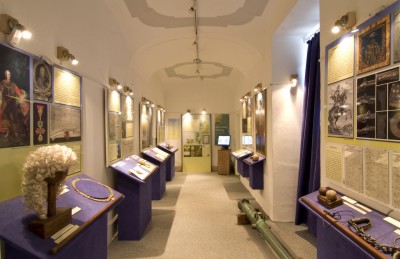 About 1800,
a six-column balcony and a gable were added to the facade of the castle. The gable was adorned
with the Batthyány family's coat of arms. About 1800,
a six-column balcony and a gable were added to the facade of the castle. The gable was adorned
with the Batthyány family's coat of arms.
In 1945, in the course of the invasion of the Russian army, the outstanding picture gallery,
the library, the collection of weapons and a lot of art treasures were destroyed, pillaged and
stolen. Even the huge archive wasn't spared. The remaining documents and art treasures had
then been expropriated by the Communists and have so far not been returned to the family.
Nowadays they can be seen, among other places, in the Hungarian National Museum and the Public
Records Office.
Open times of the museum:
From April 1 to October 31: 10 a.m. - 5 p.m. (every day except Monday)
From November 1 to March 31: 10 a.m. - 12 p.m. and 2 p.m. - 4 p.m. (every
day except Sunday and Monday)
The museum shows periodic exhibitions in the castle chapel.
In 2009:
March 28 - May 10: Factory Faulty coins and banknotes
May 18 - August 8: Men patronage, patrons, prelates - Batthyány family and
the church
August 19 - October 31: Carolus Clusius and Balthazar Batthyány
October 3 - November 4: Herend in the castle - Porcelain Exhibition
Newsletter continues as number 187A.
THE BURGENLAND BUNCH NEWS - No. 187A
DEDICATED TO AUSTRIAN-HUNGARIAN BURGENLAND FAMILY HISTORY
May 31, 2009
(c) 2009 - The Burgenland Bunch - all rights reserved
The second section of this 2-section newsletter includes:
1) WHAT'S NEW IN THE SZENTPETERFA GENEALOGY WEBSITE? (by Steve Geosits and John
Lavendoski)
2) RECORDINGS ON THE SZENTPÉTERFA GENEALOGY PAGES (by Steve Geosits)
3) 1946 DEPORTEES FROM PERNAU (Submitted by Emmerich Koller)
4) WOLFS / BALF DEPORTATION LIST (by Marsha Jenakovich)
5) LDS FILMS BORDERLAND
6) BURGENLAND EMIGRANT OBITUARIES (courtesy of Bob Strauch)
1) WHAT'S NEW IN THE SZENTPETERFA
GENEALOGY WEBSITE? (by Steve Geosits and John Lavendoski)
In the BB News No. 156A issue (dated Oct. 31, 2006), BB members Steve Geosits and John
Lavendoski announced the launch of a new genealogical website for those individuals and
families who have ancestors from the village of Szentpéterfa, Vas, Hungary (Petrovo Selo), or
from any of the nearby Austrian villages that were once a part of Western Hungary, including
Eberau, Gaas, Kulm, Winten, Kroatisch Ehrensdorf, Edlitz, St. Kathrein, and Harmisch.
From those modest beginnings over two and a half years ago, we are happy to report that the
website has grown considerably in both subscribership and content. We now have over 167
registered users with the largest percent of registrations coming from the USA (68%), Hungary
(23%) and Canada (4%).
When it was launched, the Szentpéterfa website contained data from John’s offline database,
and consisted of about 3000 individual entries, 250 photographs and 70 source entries. Since
that time, Steve has been continually adding more content, and has been busy managing
registrations, interviews, software upgrades and other design improvements. As a result, the
website has almost tripled in size. Here are some recent statistics, and a summary of new
features that have been added.
Profiles – We now have a total of 8290 individual and 2810 family profiles, 650 photographs
and 281 source entries defined to the site. Where known, census and immigration data, as well
as Steve’s “house name” data and descriptions have been added for many individual and family
profiles.
Albums – This section was expanded and now includes 30 family photo albums. Other albums have
been created for villagers who served or became priests, sisters and teachers; as well as
memorial albums to honor those who died in World War I and World War II, and to those who were
exiled to Hortobágy during the communist years.
Recordings - About 70 Croatian and Hungarian traditional songs have been added to the website.
These include recent contributions from musicians and singers in Szentpéterfa, as well as
older songs that were played and first recorded by Steve and his family in the 1970s.
Most Wanted – This new feature was added so that we can reach out to others in our community
for help in the identification of unknown people in “mystery photographs”.
Maps - A Google Maps interface has been incorporated into the website, making it possible to
see map locations of birth, marriage and death when looking at an individual’s profile.
Currently over 500 different locations have been defined with this new mapping feature.
Languages – Croatian and German translation scripts have been added to the site. Steve is
currently coordinating an effort with volunteers in the United States and in Hungary to create
a much needed Hungarian translation script, and to provide Croatian and Hungarian text to all
descriptions on the site.
In closing, we wish to thank all of our subscribers who have contributed content to the site
and who have given us positive feedback and encouraging support for our efforts. You have
helped make the Szentpéterfa Genealogy website a success.
If any of our Burgenland Bunch members have ancestors who are either from Szentpéterfa or from
one of the surrounding villages mentioned above, we encourage you to register on our site at
www.szentpeterfa.com. If you do register, please let us know the names of your ancestors and
your relationship to them, so that we can properly set up your access and to better assist
you.
2) RECORDINGS ON THE SZENTPÉTERFA GENEALOGY PAGES (by Steve Geosits)
Editor: The following message was sent to registered members of the Szentpéterfa Genealogy
Pages at www.szentpeterfa.com. If you have an interest in Szentpéterfa or traditional music,
you should consider registering. We thank BB Staff member Steve Geosits and his team for all
their hard efforts on this complementary site.
Greetings! This is Steve Geosits, the webmaster and one of the keepers of the
www.szentpeterfa.com genealogy site. I recently
added 56 recordings of traditional Croatian and Hungarian songs to the website that I hope all
of our Petroviscani will enjoy. To see the recordings, go to the Recordings tab from the home
page.
1. The first set of songs feature Janos Geosits (my father) playing the organ and Stephan
Skrapits (my uncle) playing the violin, with family and friends singing in New York City. The
collections are called: Hrvatske Jacke and Vugarske Jacke.
2. The second set of traditional Péterfai songs, "Accordion Solos" feature János Geosits. Both
of these collections were recorded on cassette tape by me and others in the 1970s on various
gatherings in New York. I then transferred them to digital format in 2008. Janos Geosits
learned to play the accordion at an early age and performed at many weddings and dances in
Szentpéterfa, and later at many local gatherings in New York City. Stephen Skrapits was a
carpenter, and even made his first violin in Szentpeterfa when he a young lad. He played with
my father at many dance events and gatherings in New York City.
3. The next set of traditional Péterfai songs, "Accordion Solos" feature Antal Merotei. These
recordings were recently made specifically for our website. Antal Merotei has played accordion
in the village for over 20 years. He was the member of the Pinka Band, he played in dance
groups, in the Ljubicica choir and in some of the local plays that were performed in Petrovo
Selo.
4. Finally, two songs feature the Ljubicica zenski choir and have been generously contributed
to our website by members of the group. These were taken from the CD recording called "U
Pincenoj Dragi." We hope we can share more of their beautiful vocals to our website soon.
Steve Geosits, Szentpéterfa Genealogy Pages,
www.szentpeterfa.com
3) 1946 DEPORTEES FROM PERNAU (by Emmerich Koller)
A former Pernau resident graciously compiled and forwarded this list of all persons deported
from Pernau in 1946.
The list format is as follows: Name of Head of Family (Listed in Hungarian), Number of total
Family Members Deported, Name of Head of Family (Same Person Listed in German).
Schmidt Terézia 1 family member Theresia Schmidt
Taschler János 2 family members Johann Taschler
Szeidl István 7 f. m. Stefan Szeidl
Enger Ferenc 2 f. m. Franz Enger
Mrs. Mittl József 1 f. m. Frau Joseph Mittl
Mrs. Eberhardt Ferenc 4 f. m. Frau Franz Eberhardt
Stéger János 5 f. m. Johann Steger
Schlaffer István 5 f. m. Stefan Schlaffer
Wölfinger Ede 5 f. m. Ede Wölfinger
Windisch Ferenc 5 f. m. Franz Windisch
Rosner István 5 f. m. Stefan Rosner
Vizler György 5 f. m. Georg Wiesler
Purker I stván 5 f. m. Stefan Purker
Gratzl János 4 f. m. Johann Gratzl
Einfaldt Ferenc 3 f. m. Franz Einfaldt
Schmidt György 2 f. m. Georg Schmidt
Mölcs József 2 f. m. Joseph Meltsch
Schmidt János 4 f. m. Johann Schmidt
Schwáb Ede 4 f. m. Ede Schwab
Mrs. Szakál János 1 f. m. Frau Johann Szakál
Schwarcz János 5 f. m. Johann Schwarz
Pfliegler István 2 f. m. Stefan Pfliegler
Schnalzer Ignác 3 f. m. Ignatz Schnalzer
Reinhardt Ferenc 5 f. m. Franz Reinhardt
Schrammel János 3 f. m. Johann Schrammel
Krammer Ferenc 5 f. m. Franz Krammer
Krammer István 4 f. m. Stefan Krammer
Pehr Károly 6 f. m. Karl Pehr
Schrammel Margit 6 f. m. Margarete Schrammel
4) WOLFS / BALF DEPORTATION LIST (by Marsha Jenakovich)
I was online Googling a few days ago and was lucky enough to stumble upon a deportation list
(Vertreibung) for the village of Wolfs (now Balf), Hungary. The list is posted at:
http://www.steinerlh.de/nachHausnummer.pdf
It seems to originate from someone's personal website, so I'm not sure if there are similar
lists available for other villages from another more official source. I know the Burgenland
Bunch has members whose ancestors, like mine, fell somewhat arbitrarily on one side or the
other of modern borders, which in some cases determined their destiny after the war. If any BB
members know of the source of this information, perhaps they can share it with the Bunch. The
internet is an amazing, evolving resource, but sometimes it's hard to keep up.
5) LDS FILMS - BORDERLAND
|